


Vikram Lander's Crash & Power of Amateur Astronomy
- Sivaraj Kumar
- Dec 3, 2019
- 4 min read
Updated: Dec 4, 2019
After months of silence from ISRO and admitting that they have lost the lander last month, ISRO still haven't released a single image of the crash site.
Finally!
NASA released the before and after mosaic of SRO's lander, Vikram.
VIKRAM'S CRASH SITE

In this image, you can see a bright pixel on the center. It's due to the hard impact of Vikram's lander. The debris have landed as far as one km from the main crash site.
Years of planning, designing and testing.... All the hardwork of ISRO'S scientists, right now sitting as a bright pixel with debris scattered here and there on the Moon's south pole.
Last week, ISRO released a report on what went wrong with the lander.
The descent's first phase took the lander from 30km to 7.4km above the surface of the moon, with velocity reduced from 1,683m/s to 146m/s. But during the second phase of descent, "the reduction in velocity was more than the designed value."
"Due to this deviation, the initial conditions at the start of the fine braking phase were beyond the designed parameters," the government said. "As a result, Vikram hard landed within 500m of the designated landing site."
Is this a huge loss for ISRO?
Yes!
Does that mean Chandrayan 2 mission is a failure?
NOPE!
A VERY BIG NOPE!
SPACE IS HARD
Space is hard! Always remember that. Anything could go wrong anytime.

In 1986, NASA's space shuttle exploded after 73s into the flight, killing 7 astronauts.
In 2003, Columbia disaster happened and killed 7 astronauts, including Kalpana Chawla.
SpaceX rockets failed first three times. Now they have the most powerful rocket (Falcon Heavy) which is also reusable.
We humans have always been learning from failures. That's one of the key aspects of humans.
We will be going to the Moon again in 2024 and eventually Mars by 2030. Lots of failures and human losses are ahead. This reminds me of the ad posted by Shackleton to recruit crews for exploring Antarctica.

Astronauts know the risks involved. Yet they are ready to pack their bags and leave Earth anytime.
Why?
We were hunters, gatherers and wanderers for thousands of years.
You might think, since we have left forests and moved to cities, we humans have changed. But we didn't.
Right now, we hunt for knowledge, gather for love. The only thing left to do is to wander among the stars and become a space-faring civilisation.
Chandrayan 2 is the biggest leap for ISRO in space in years. Even though, ISRO has lost the lander, it still has a powerful orbiter orbiting the Moon. The orbiter can capture images of the Moon with extreme high resolutions.
HOW NASA FOUND THE CRASH SITE
Now that I have talked about Vikram lander's crash and how space is hard and failures are fine in space, let's talk about how the crash site was found. It's an interesting story and ISRO can learn a lot from it.
After ISRO lost it's communication with the lander on Sep 7, NASA's Lunar Reconnaissance Orbiter took images of the crash site. NASA released the images and data they gathered public on Sep 26.
At that time, Moon's south pole going into its hibernation period. The image was dark and NASA announced they weren't able to see the lander. We all know that.
An amateur named Shanmuga Subramanian, downloaded NASA's image and found a bright pixel. He immediately contacted NASA and asked them to check it out. With this tip, NASA compared the images taken before and after the loss of Vikram's lander and confirmed it was indeed the crash site of ISRO's Vikram lander.
You can read NASA's press release here : https://www.nasa.gov/image-feature/goddard/2019/vikram-lander-found
What can ISRO learn from this? The power of amateur astronomy.
POWER OF AMATEUR ASTRONOMY
Few years ago, a star made headlines everywhere. Many speculated, the unnatural change in the brightness of the star proves a Type-II civilisation. Only a Dyson Sphere can cause the star to behave like this.
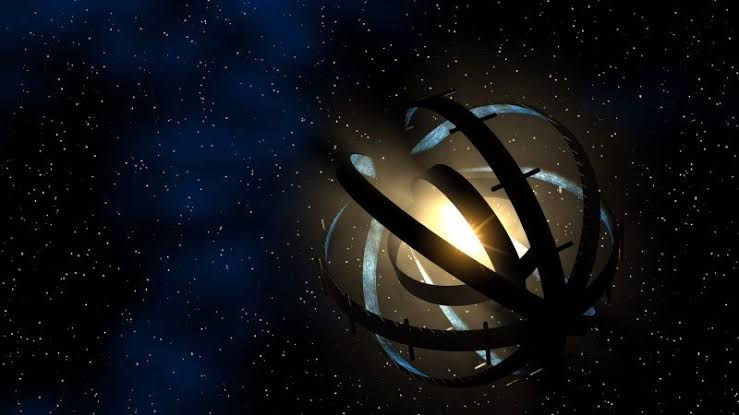
(A Dyson Sphere is a huge sphere that is constructed around a star to harness its energy)
You might remember this as "Tabby's Star". Its strange behaviour was discovered by an amateur astronomer. Not by NASA. It was only possible because the data was made public.
Last year, I was able to find an Exoplanet using the transit data collected by Kepler. Think about it.
Few centuries ago, people were thinking Earth was the centre of the Universe and were burning philosophers who talked against their holy belief system that promoted this Geocentric idea.
But now I can simply download the data from internet and write few lines of code and BOOM! An Exoplanet (A Hot Jupiter to be exact)! Right infront of my 4GB RAM puny laptop.
Data is gold! I wouldn't be surprised if a group of amateurs announce they have discovered the Planet 9 in few years.
I wish ISRO had released the data captured by the Orbiter soon after Vikram's crash. Ugh!
Anyway. We finally know what went wrong and how the crash site actually look like.


Comments